
Layout mistakes
Layout mistakes that ruin the entire installation.
The examples below reflect real conditions we are asked to evaluate and, in many cases, correct. These are not material failures. They are layout, alignment, and finish decisions made before or during installation that affect how the entire space reads.
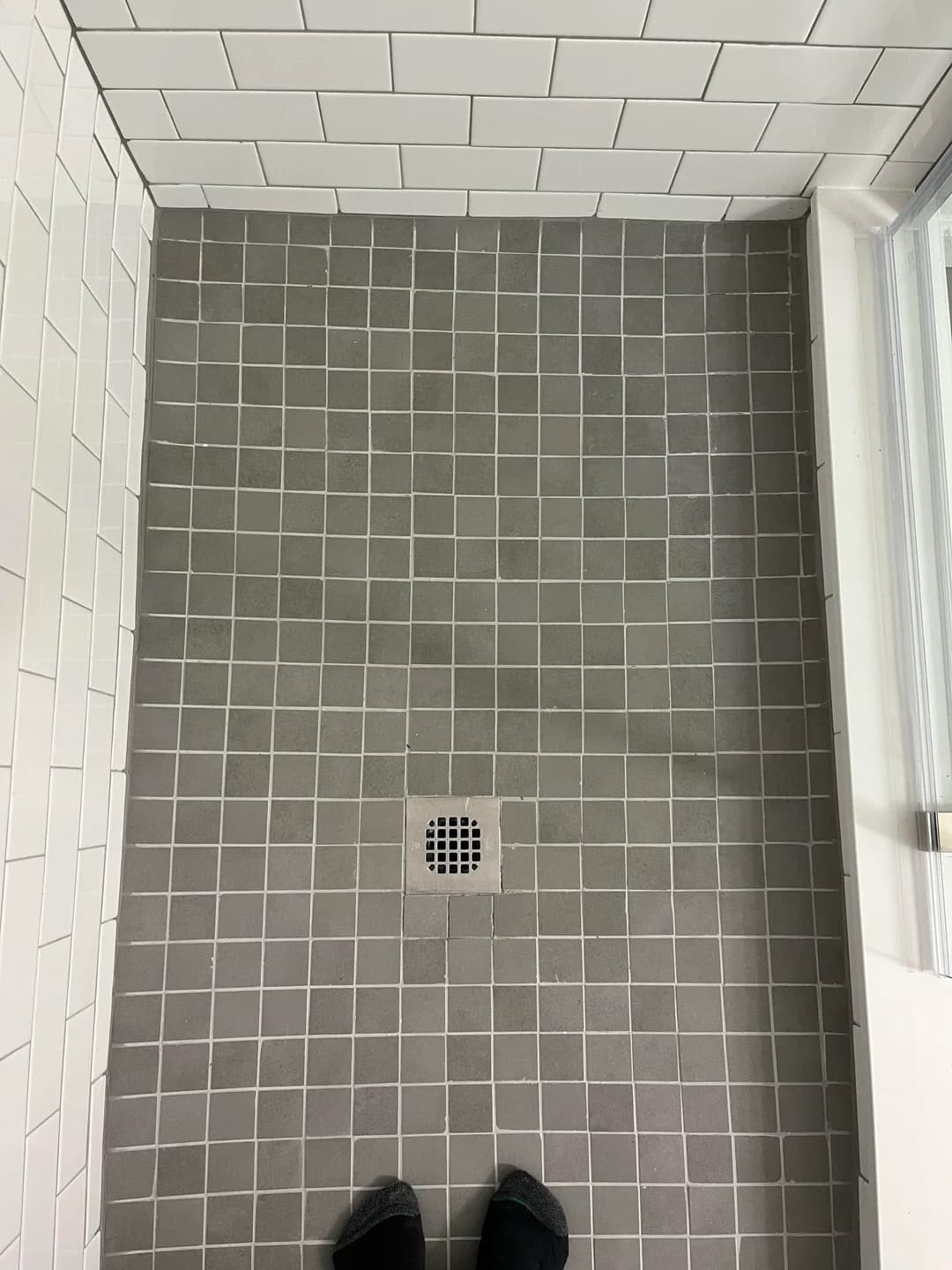
The drain layout decides how the entire shower feels.
At first glance, everything can look acceptable. But layout is not about looking fine from a distance. It is about balance, proportion, and how the geometry feels once the room is complete.
Around drains and perimeter cuts, weak planning becomes visible. If the layout is not resolved before installation begins, the floor can feel slightly off even when the material itself is good.
This is not a material issue. It is a planning decision.
Common layout issue: the surface reads clean at first, but the drain relationship and surrounding cuts do not feel fully resolved.
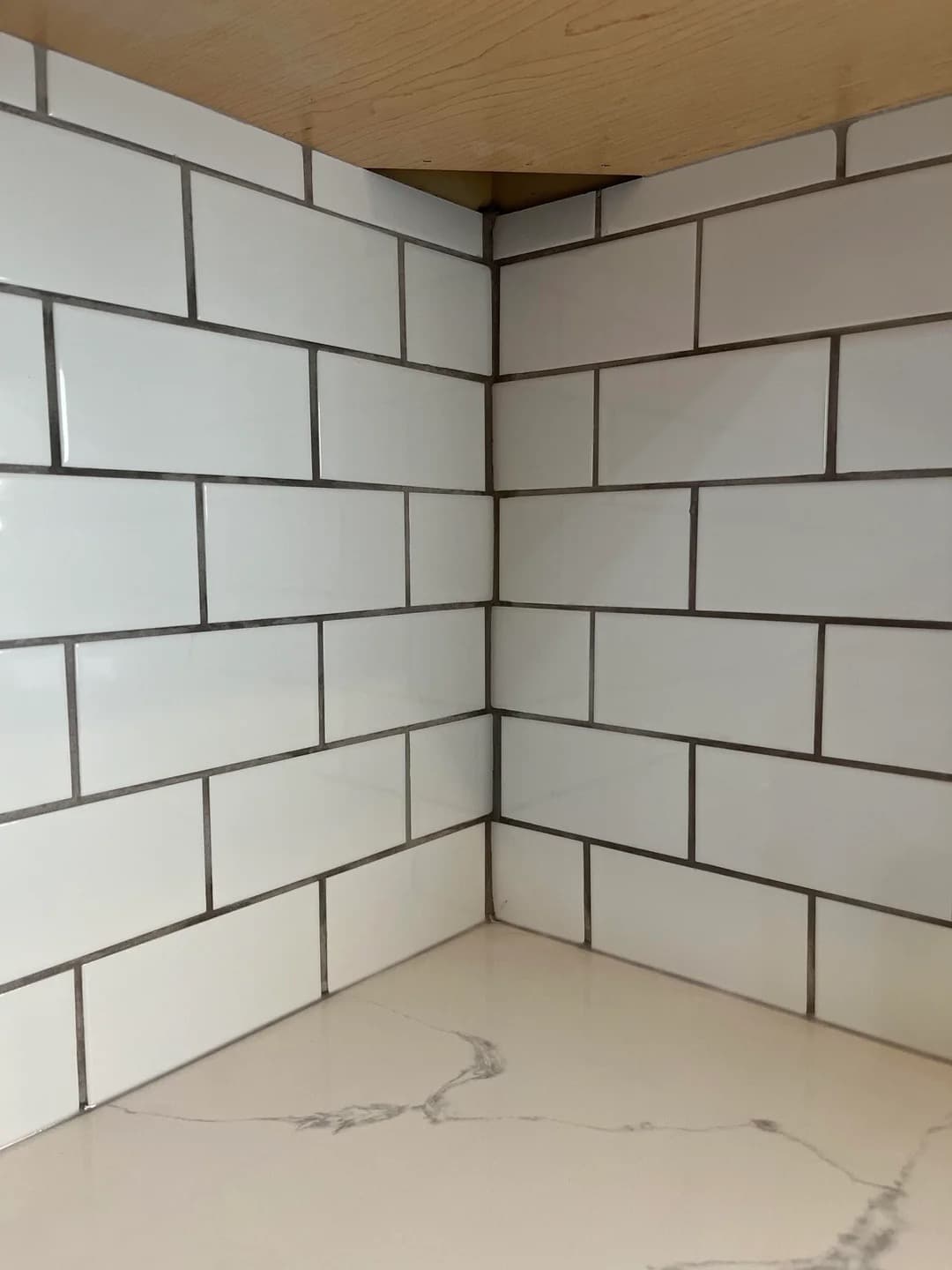
Alignment is what makes tile feel right or wrong.
Corners tell the truth about alignment. When grout lines do not carry through cleanly, continuity breaks and the wall loses the visual control that good installation depends on.
This is not a tile issue. It is a planning issue that should have been resolved before the first tile was set.
This is not a material issue. It is a planning decision.
Alignment inconsistency: the corner interrupts the pattern instead of carrying it cleanly through the turn.
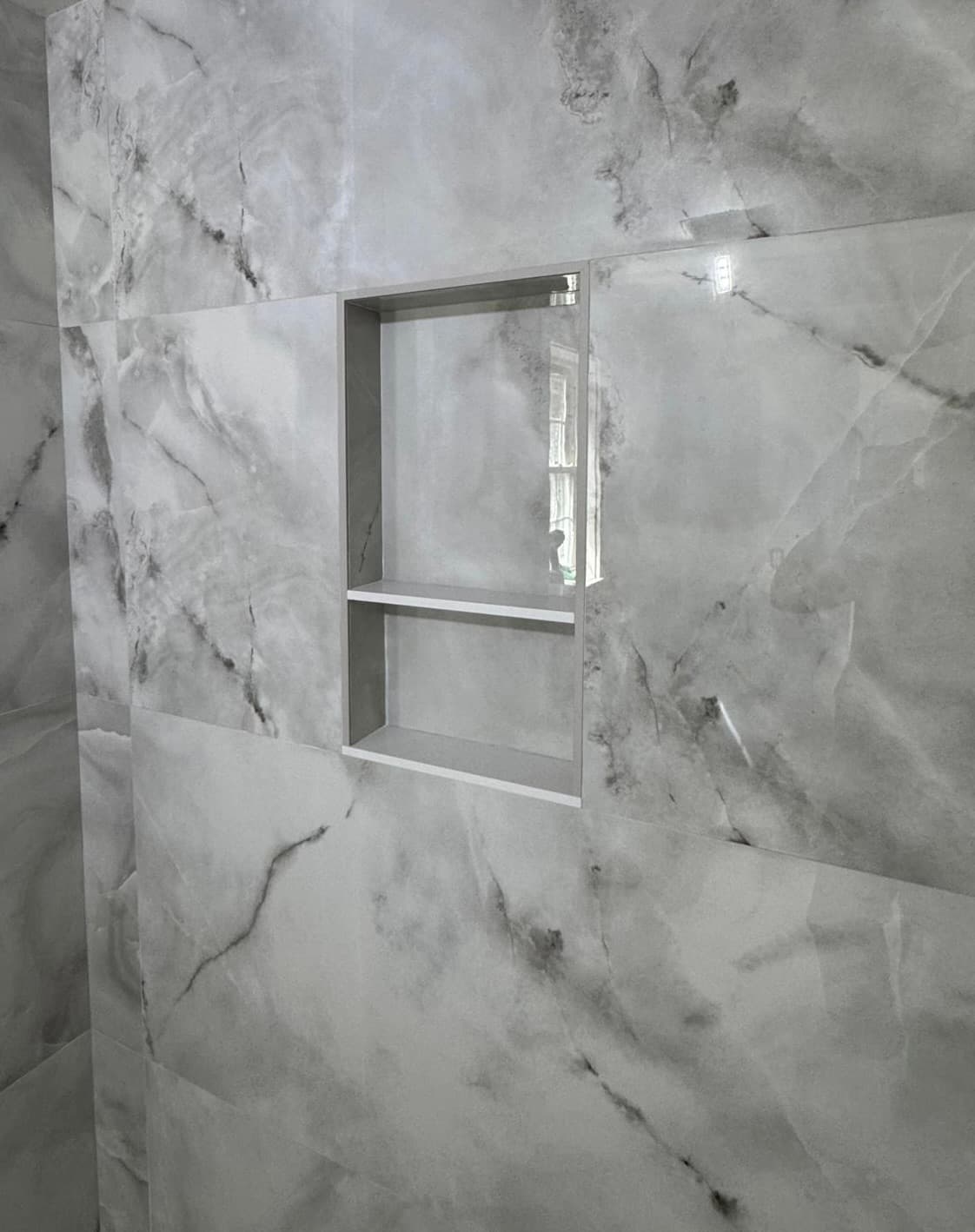
Control is decided before the first tile is set.
When layout is resolved before installation begins, interruptions like niches, edges, and transitions align cleanly with the surrounding system.
That level of control is not improvised during installation. It comes from reference lines, balanced cuts, and decisions made early.
Finish details reveal the installer, not the material.
Perimeter joints, edge conditions, and finish transitions are where rushed work becomes visible. These are small decisions, but they affect the quality of the whole installation.
High-end materials do not hide weak detailing. If the finish work is not controlled, the room loses refinement immediately.
This is not a material issue. It is a planning decision.
Finish quality issue: perimeter detailing was installed, but not resolved with consistency.
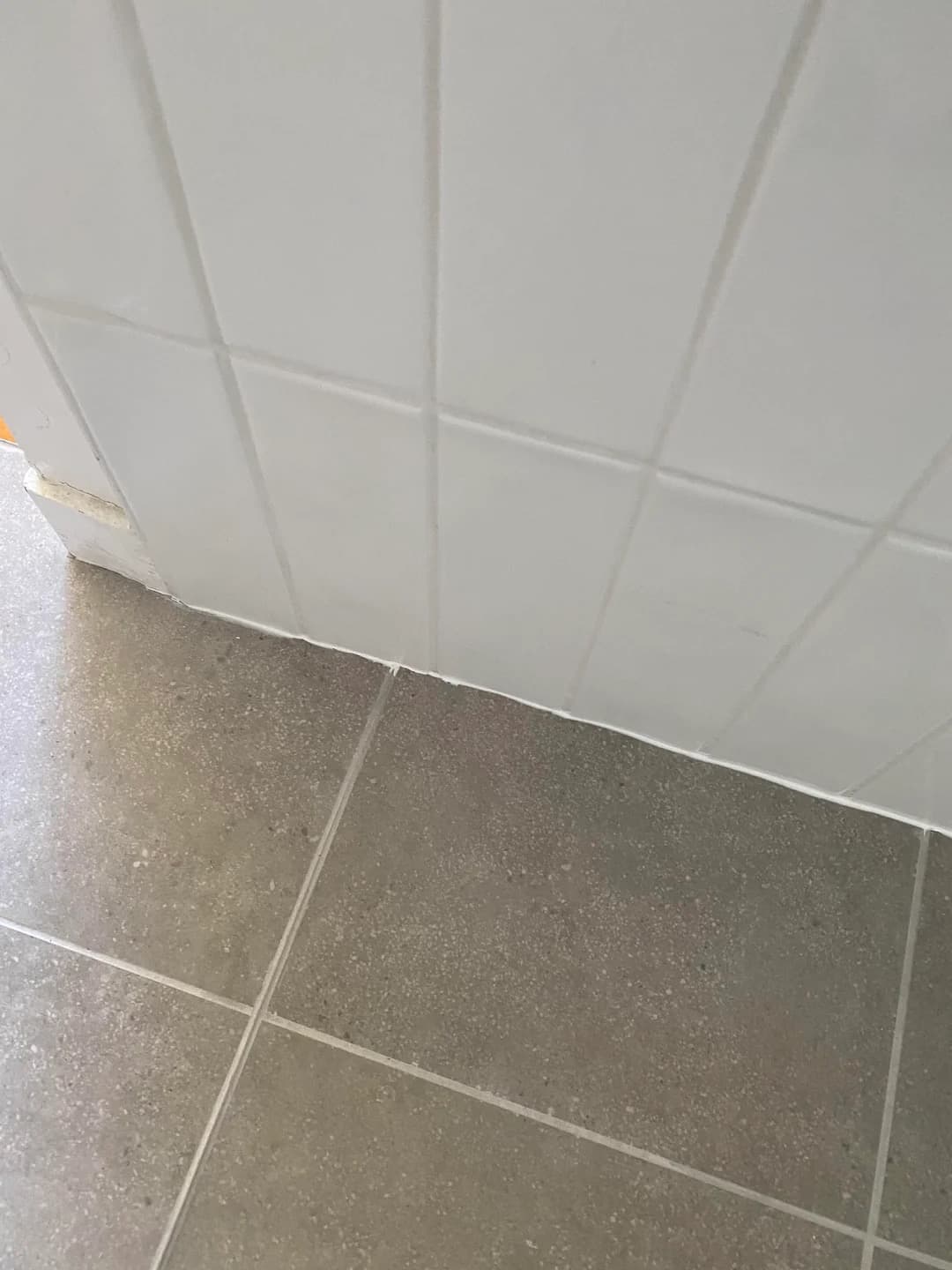
A project is not finished when tile is installed.
It is finished when the tile connects cleanly to the rest of the room. Transitions are part of the installation, not an afterthought.
When those conditions are improvised instead of planned, the result feels unfinished even if the tile itself is already set.
This is not a material issue. It is a planning decision.
Unresolved transition detail: the tile was installed, but the connection to the adjacent flooring was never properly finished.
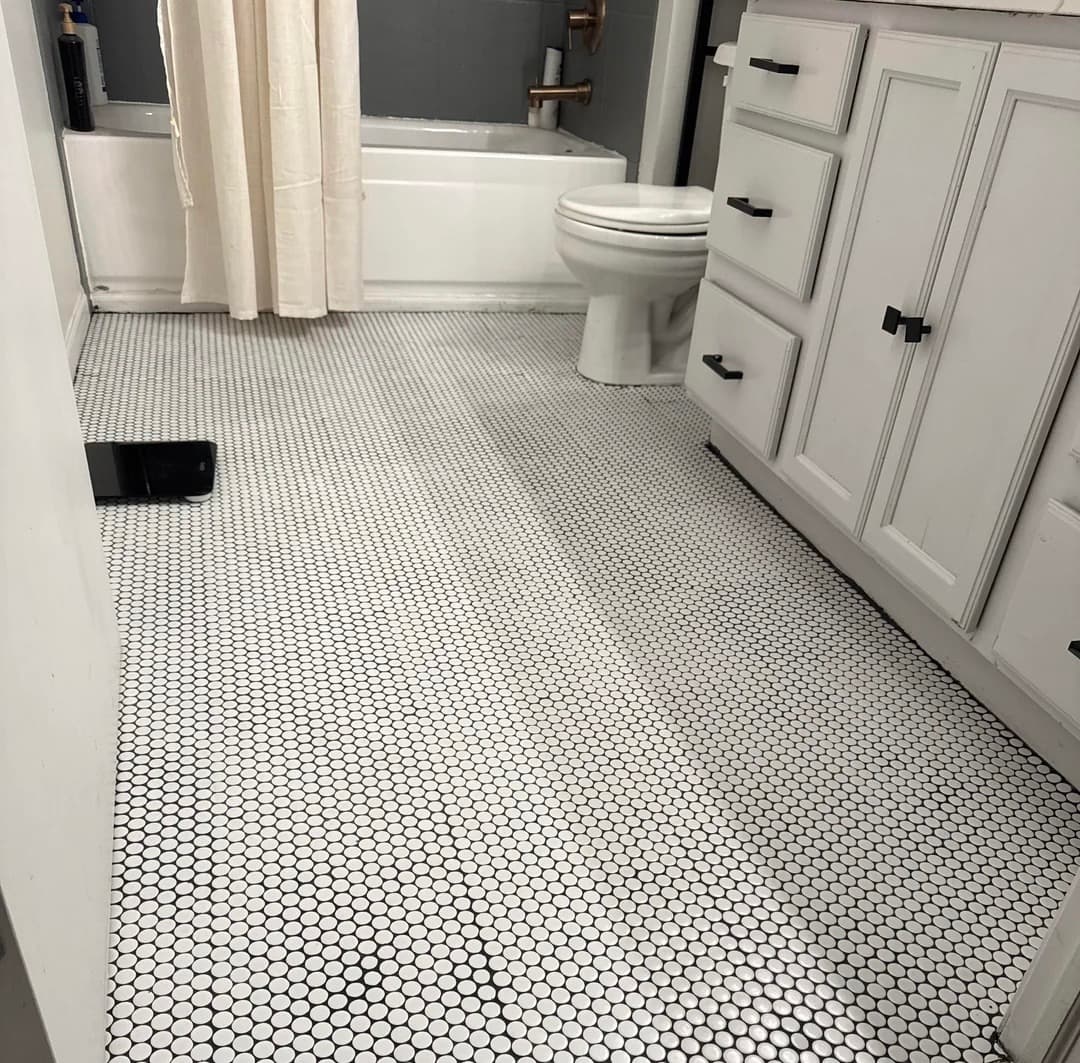
Most layout mistakes are not material failures. They are planning failures you live with every day.
Good materials cannot correct weak layout planning, poor centering, or unresolved finish details. Once the tile is set, those decisions become permanent.
This is why layout should be treated as a critical part of the installation, not something figured out during the job.
The difference between average work and refined installation is not the material. It is the level of control before the first tile is placed.
Good layout does not draw attention to itself. It feels resolved.
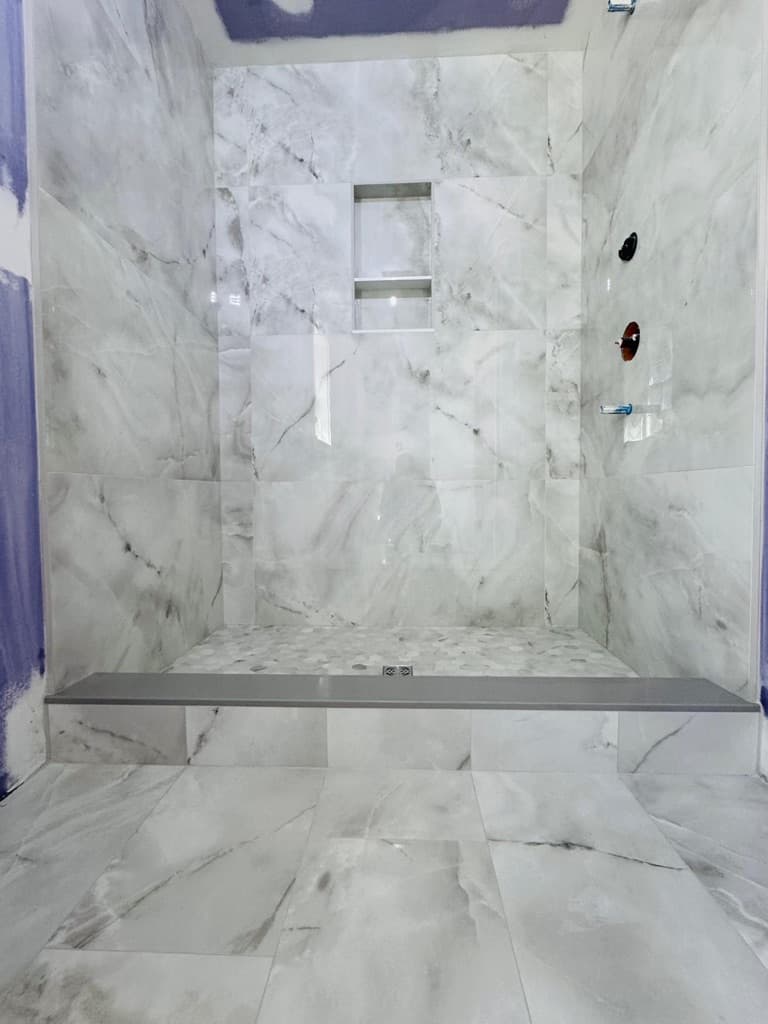
The difference between average work and refined installation is not the material alone. It is the level of control behind every line, edge, and interruption.
When layout is planned from the start, the room reads clearly, finishes cleanly, and holds together as a complete system.
If the layout matters, it has to be planned before installation begins.
We focus on balance, alignment, clean finish details, and full installation control so the room feels resolved from every angle.