
System failures
Installation mistakes that damage the home and reduce property value.
Some installation mistakes are visible immediately. Others silently affect moisture control, durability, and how the entire property is perceived. The issue is not the tile. It is the level of control behind it.
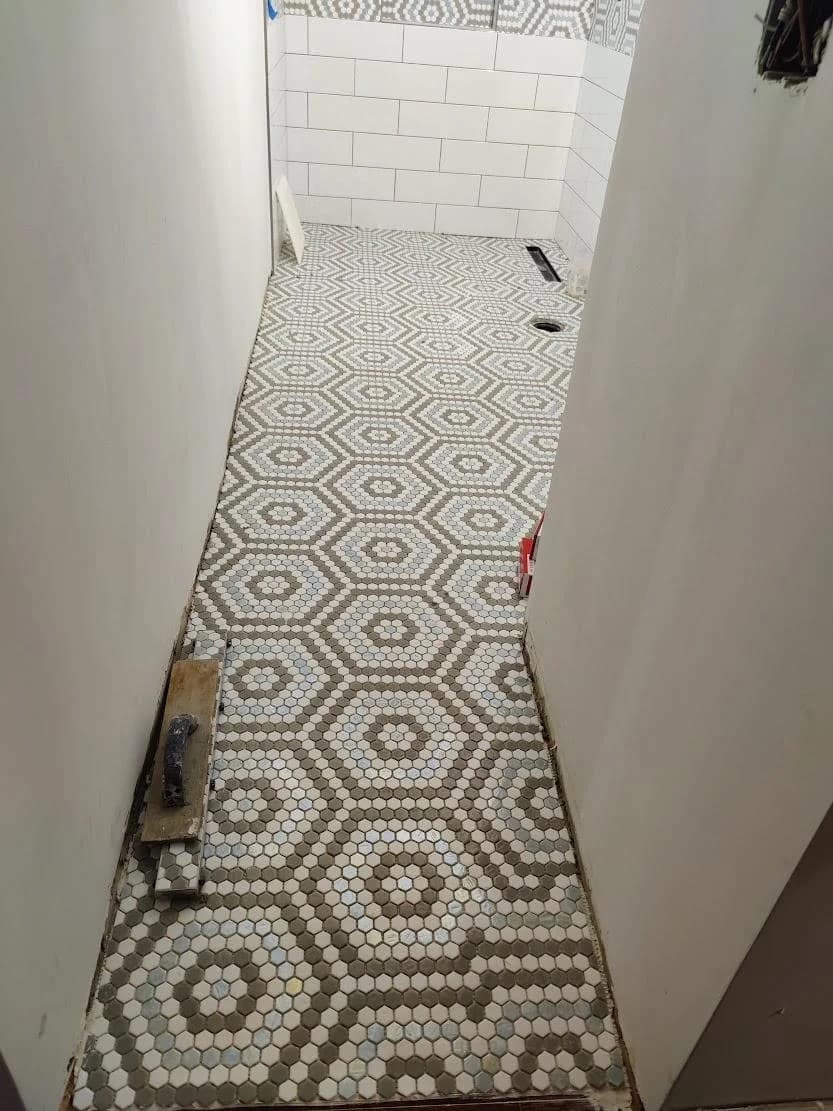
The pattern is installed, but the space was never considered.
Tile layout must respond to the room, not just fill it. When patterns drift or fail to align with the geometry of the space, the entire installation feels off even if the material itself is expensive.
These are the kinds of decisions that reduce perceived quality immediately. They do not need years to show up. They are visible the day the project is finished.
This is not a material issue. It is a planning decision.
Layout failure: the pattern exists, but the space was never fully considered.
Every focal point exposes the installer.
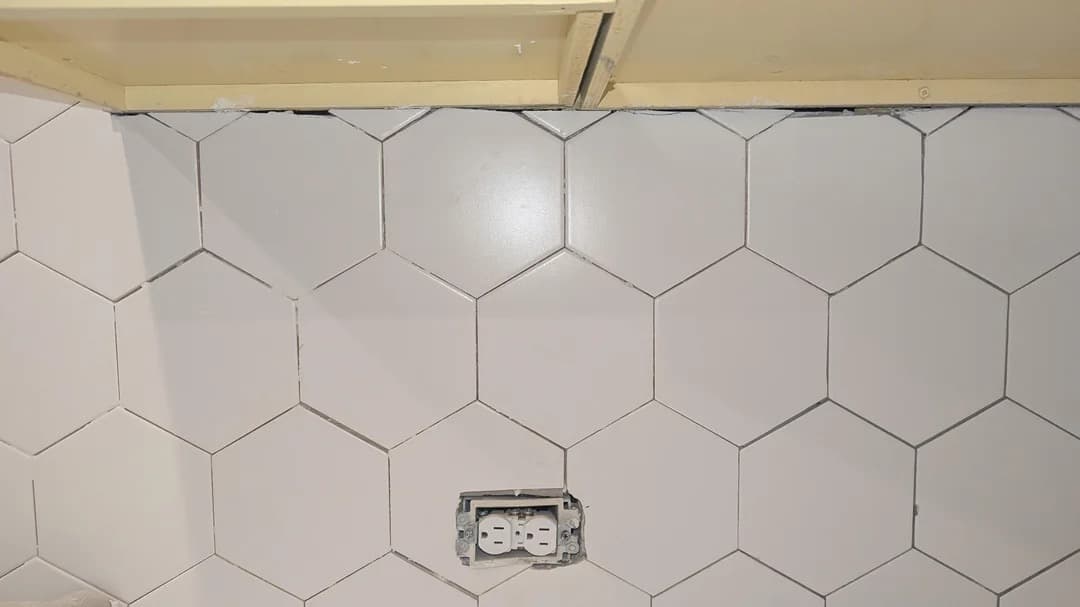
Outlets, fixtures, and visible interruptions require planning before installation begins. When cuts are improvised around them, the result looks unfinished and unintentional.
This is where homeowners and builders start questioning the entire installation, because the focal point reveals whether the work was actually controlled.
This is not a material issue. It is a planning decision.
Focal-point failure: the outlet cut and pattern relationship were not resolved cleanly.
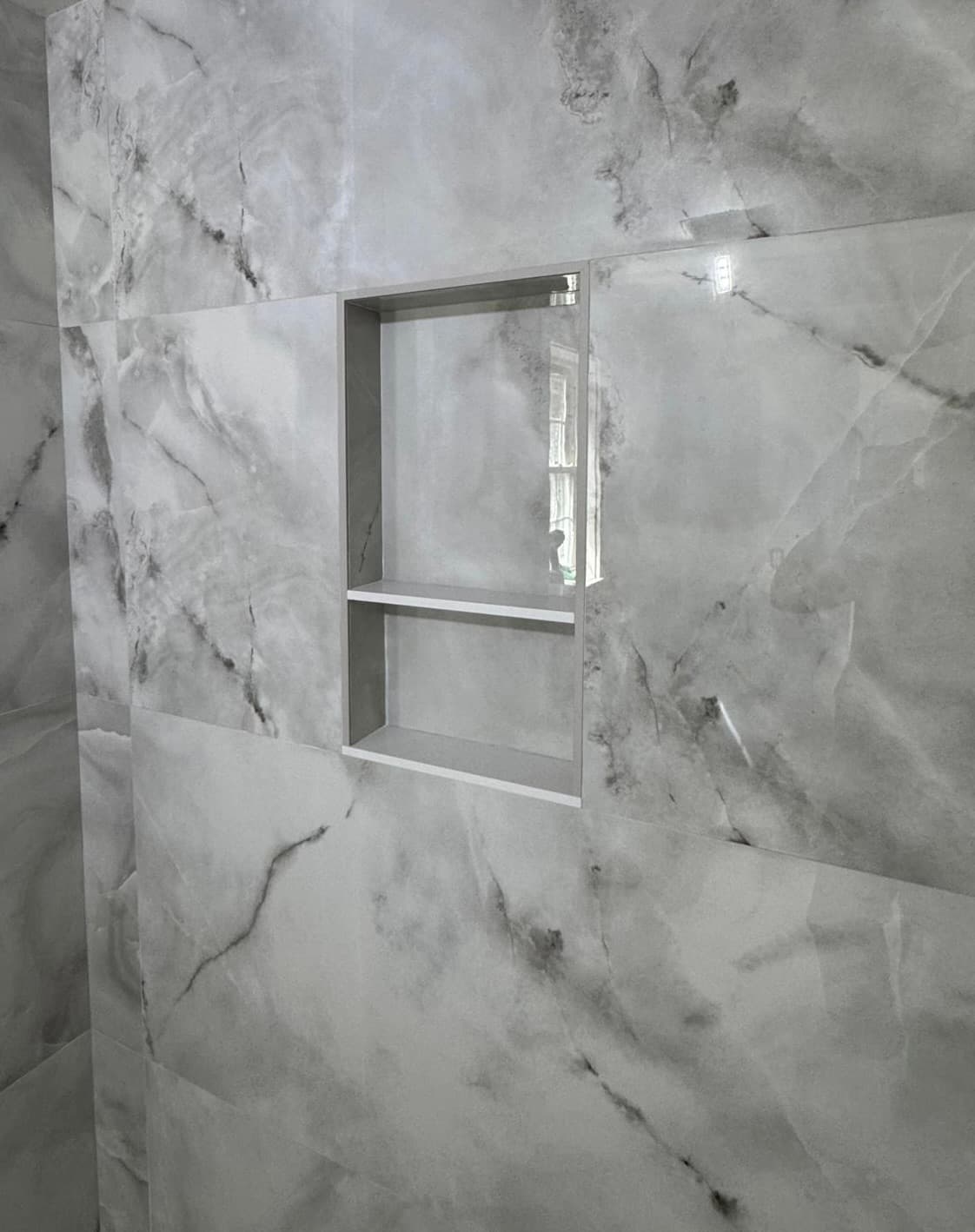
Control is what protects the value of the finished space.
When tile is planned as a complete system, focal points, interruptions, and finish lines align with the room instead of weakening it.
That kind of control improves not only appearance, but also the long-term perception of quality throughout the home.
Edges are where control is either proven or lost.
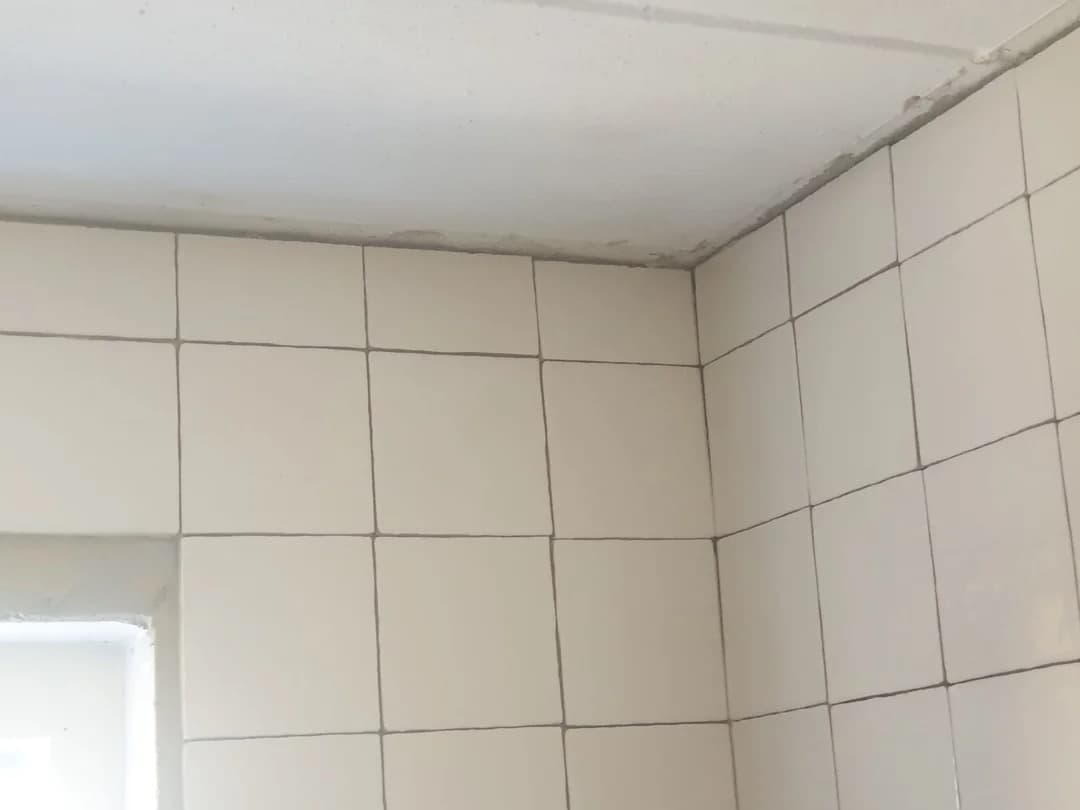
The way tile meets ceilings, trims, and boundaries defines the level of execution. Poor terminations leave visible inconsistencies that cannot be corrected later without removal.
These are not small cosmetic misses. They lower the perceived standard of the whole space.
This is not a material issue. It is a planning decision.
Termination failure: the edge condition makes the installation feel unresolved.
Material control is part of the installation.
Installation is not only placing tile. It includes selection, consistency, and attention during the process. When this is ignored, even good materials look careless.
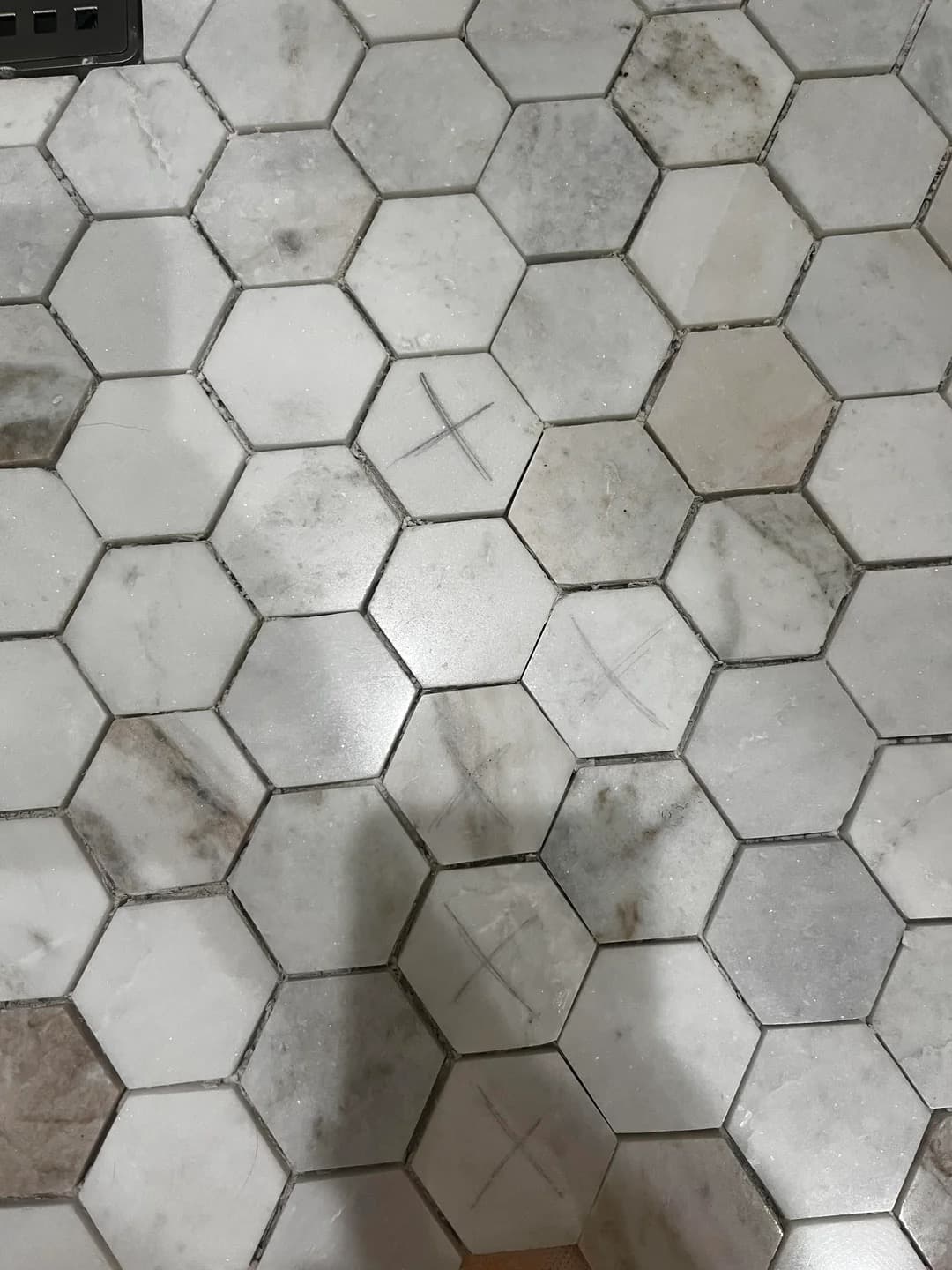
Visible markings, weak sorting, and inconsistent material control immediately reduce how finished and valuable the room feels.
This is not a material issue. It is a planning and quality-control decision.
Quality-control issue: the material was placed, but not managed with finish-level discipline.
These mistakes do not just look bad. They change how the property is valued.
Some installation mistakes are visible immediately. Others create weak points that affect maintenance, durability, and long-term perception.
The difference between acceptable and refined work is decided before the first tile is placed. Once installed, these mistakes usually remain until the work is removed and redone.
Poor execution lowers confidence in the space. Good execution protects both performance and perceived value.
Good installation protects more than the finish.
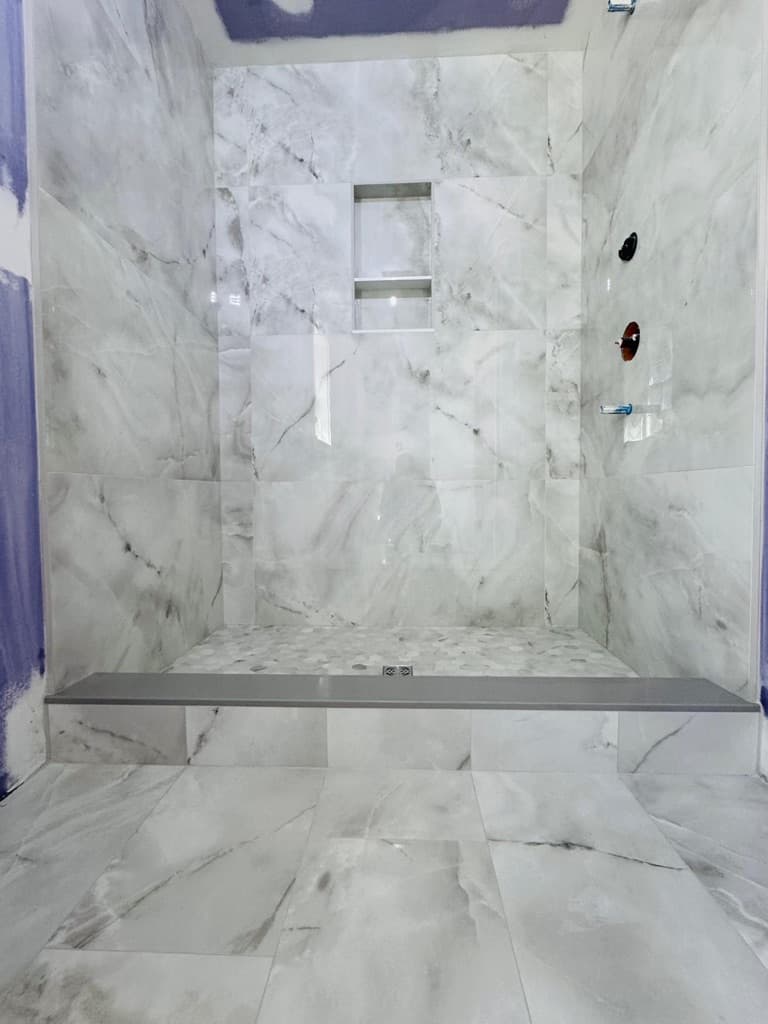
Poor decisions reduce confidence in the room immediately. Good installation does the opposite. It makes the space feel stable, intentional, and valuable.
We treat layout, edges, transitions, and system execution as value-defining parts of the project, not details left to solve at the end.
Good installation protects more than the finish.
We treat layout, transitions, edges, and system execution as value-defining parts of the project, not details to solve at the end.